Summary
In May and June 2026, miners employed by Özşen Madencilik, a coal mining company operating under Kiremitçiler Group in Türkiye’s northwestern province of Edirne, carried out one of the most remarkable labour struggles in the Turkish mining sector in recent years.
What began as a dispute over unpaid wages evolved into a broader confrontation involving dismissals, allegations of anti-union retaliation, occupational health and safety concerns, police intervention, the underground occupation of a mine, a hunger strike, restrictions on communication with workers underground, pressure against journalists covering the dispute, and ultimately the firing of live ammunition toward workers and their family members.
After twenty-seven days of resistance, workers secured a negotiated settlement through the mediation and organization of the Independent Mine Workers’ Union (Bağımsız Maden-İş). The outcome included commitments regarding workers’ receivables and the signing of a written protocol between the company and the union.
The significance of the dispute extends beyond the immediate economic gains secured by workers. The Özşen struggle also provides an important example of independent union organizing in Türkiye, where collective bargaining rights remain heavily regulated through state-controlled authorization procedures that have long been criticized by international labour organizations
The Company
Özşen Madencilik operates coal mining activities in Uzunköprü, Edirne.
The company is part of Kiremitçiler Group.
According to workers and union representatives, the dispute involved approximately 150 workers directly affected by unpaid wages, unpaid overtime compensation, severance obligations and related labour rights violations.
The operation has also attracted attention because of reported commercial relationships involving mining equipment supplied through cross-border leasing arrangements linked to Chinese mining machinery manufacturer Zhengzhou Coal Mining Machinery Group (ZMJ).
Why Did the Workers Begin Their Struggle?
The dispute began on 20 May 2026.
Workers reported that wages had remained unpaid for months.
In addition, overtime payments had reportedly not been paid for approximately one year.
Retired miners were also waiting for severance and other legally mandated compensation.
As the Eid holiday approached, many families found themselves unable to meet basic household expenses despite months of work underground.
The workers’ initial demands were straightforward:
- Payment of outstanding wages;
- Payment of unpaid overtime compensation;
- Payment of severance and retirement-related entitlements;
- Reinstatement of workers dismissed for demanding their rights;
- Respect for freedom of association and workers’ representation rights;
- Improvements in occupational health and safety conditions.
At the outset, workers did not seek confrontation.
Through Bağımsız Maden-İş, they requested negotiations and attempted to resolve the dispute through dialogue.
When these efforts failed, workers exercised their legal right to refrain from work and suspended production.
Escalation of the Conflict
The dispute escalated rapidly.
According to Bağımsız Maden-İş, at least twenty-one workers were dismissed after demanding payment of wages and other entitlements.
Workers also reported additional forms of pressure. Facilities used by striking workers, including the cafeteria and later the prayer room, were closed. Images of miners praying outside locked doors became one of the early symbols of the dispute.
As negotiations stalled, workers began organizing public demonstrations.
During the first week of the dispute, miners marched to Keşan’s Cumhuriyet Square under the slogan:
“We are not asking for charity. We are asking for the fruits of our labour.”
In early June, workers expanded their actions and marched toward Tekirdağ, where company owners maintain offices.
Meanwhile, the dispute began exposing broader concerns regarding conditions at the mine itself.
On 4 June, a fire broke out at the operation. Workers and union representatives stated that they had repeatedly warned about maintenance deficiencies and occupational safety risks. The incident reinforced workers’ claims that the conflict was not solely about wages, but also about workplace safety.
Seeking to Be Heard
As the dispute entered its third week, workers sought to bring their concerns directly to national political authorities.
On 11 June, Bağımsız Maden-İş announced an escalating action plan.
The following day, miners attempted to reach a public event attended by President Recep Tayyip Erdoğan at the reopening ceremony of Edirne’s historic Selimiye Mosque.
Workers and family members hoped to communicate their grievances directly.
Instead, they encountered police intervention and detentions.
Despite this, the dispute continued.
Underground Resistance
After twenty-four days of unsuccessful attempts to secure a resolution, workers adopted a more dramatic form of protest.
On 13 June, miners descended underground and began an underground occupation and hunger strike.
One worker explained the decision succinctly:
“For 24 days we tried every possible way to make our voices heard above ground. Now we are underground. Either we will die, or we will win our rights.”
According to Bağımsız Maden-İş, communication between workers underground and those on the surface was subsequently disrupted after the control system used for regular contact was disabled.
This development generated serious concerns regarding the safety and wellbeing of workers underground.
At the same time, journalists covering the dispute also came under pressure.
Journalist Umut Taştan, who had reported from the mine and helped communicate workers’ situation to the public, became the subject of legal proceedings initiated by the employer.
From Labour Dispute to Human Rights Concern
On the twenty-sixth day of the struggle, events escalated dramatically.
Family members gathered near the administrative building seeking information about miners underground.
According to Bağımsız Maden-İş, shots were fired from the administrative building toward workers, family members and union representatives.
The union reported that three shots were fired from two separate firearms.
Fortunately, nobody was injured.
The incident marked a turning point.
In response, workers and their families occupied the mine.
What had begun as a dispute over unpaid wages had become a confrontation involving fundamental questions of safety, dignity, freedom of association and democratic rights.
Victory After Twenty-Seven Days
The struggle did not end underground.
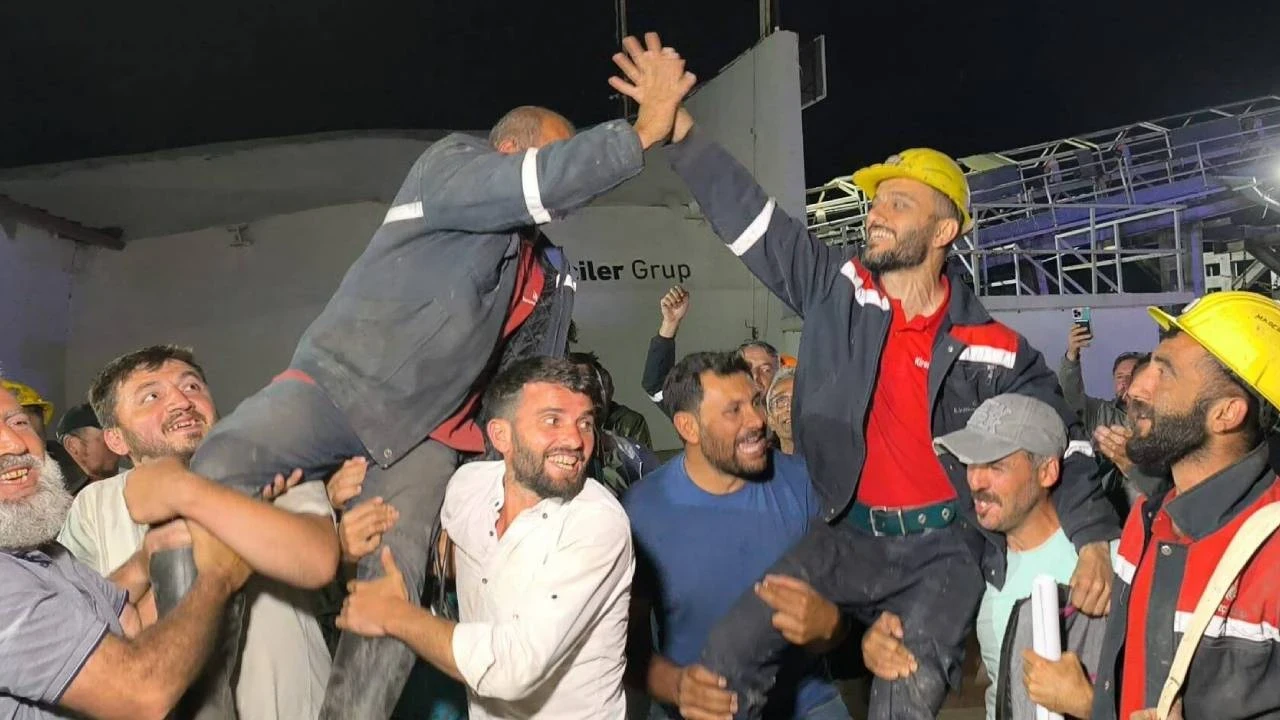
Following twenty-seven days of resistance, negotiations intensified and resulted in a written protocol between the company and Bağımsız Maden-İş.
Workers secured important commitments regarding their outstanding receivables and other demands.
When the agreement was announced, one miner summarized the significance of the struggle in a simple sentence:
“We did not leave our children’s rights in anyone else’s pocket.”
For many workers, the victory represented not only an economic achievement but also proof that collective action remained effective even under extremely difficult conditions.
Why the Outcome Matters Beyond Özşen
The significance of the Özşen struggle extends beyond the immediate workplace.
Türkiye’s collective bargaining system requires unions to obtain official authorization from the Ministry of Labour before signing a legally recognized collective bargaining agreement.
The process involves sectoral thresholds, workplace majority requirements, employer objections and lengthy court procedures.
These mechanisms have repeatedly been criticized by the International Labour Organization (ILO), international trade union federations and labour rights organizations for creating obstacles to workers’ freedom of association and collective bargaining rights.
Employers and established unions frequently use this reality to discourage workers from joining independent unions by arguing that independent organizations cannot negotiate meaningful agreements because they lack official bargaining authority.
The Özşen case challenges that assumption.
Bağımsız Maden-İş did not obtain its legitimacy from ministerial certification.
It obtained its legitimacy from workers.
Without possessing formal collective bargaining authority at the workplace, the union nevertheless succeeded in organizing workers, sustaining a twenty-seven-day struggle, forcing negotiations and securing a written protocol.
In practical terms, the protocol signed at Özşen was not the product of ministerial authorization.
It was the product of workers’ collective power.
For this reason, the Özşen struggle represents more than a dispute over unpaid wages.
It stands as an important example of independent unionism and worker-led collective action in contemporary Türkiye.
Workers’ Demands
The workers of Özşen Madencilik entered this struggle with demands that remained consistent throughout the dispute:
- Full payment of all outstanding wages;
- Payment of approximately one year of unpaid overtime compensation;
- Payment of severance and retirement-related entitlements;
- Reinstatement of workers dismissed for demanding their rights;
- An end to pressure, threats and retaliation against workers;
- Effective occupational health and safety measures;
- Respect for freedom of association and workers’ right to collective representation.
Conclusion
Mining remains one of the most dangerous occupations in the world.
In Türkiye, miners are frequently among the first volunteers mobilized during earthquakes, industrial disasters and search-and-rescue operations. These are workers who descend underground every day while carrying the risk of never returning home.
The workers of Özşen entered this struggle seeking only payment for work already performed.
Twenty-seven days later, they emerged with something more.
They demonstrated that collective organization, solidarity and persistence remain powerful tools for workers confronting wage theft, repression and intimidation.
Most importantly, they demonstrated that even under extremely adverse conditions, workers can still win.