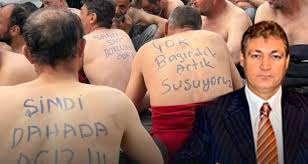
Doruk Madencilik workers are employed in the Yunus Emre Thermal Power Plant located in the Mihalıççık district of Eskişehir and in the mining sites that supply coal to this plant. Doruk Madencilik is a company affiliated with Yıldızlar SSS Holding, and the Chairman of the Board of the holding is Sebahattin Yıldız. The same group operates across multiple sectors ranging from mining to ceramics and energy.
How is capital fed? Privatization, TMSF sale and transfer process
The Adularya/Yunus Emre Thermal Power Plant and its associated assets were taken under trustee administration following July 15 and subsequently transferred to the management of the Savings Deposit Insurance Fund (TMSF). The TMSF then put this energy and mining complex up for sale. Thus, a public asset—namely the Adularya Energy Production Commercial and Economic Integrity held by the TMSF—was transferred to Doruk Madencilik through a tender process. In other words, Doruk Madencilik won the tender conducted by the TMSF. The tender price was approximately 3.3 billion TRY. According to Doruk Madencilik’s own statement, the transfer of ownership was completed on December 9, 2022, and 705 workers were transferred to the company.
In summary: the Adularya/Yunus Emre complex under TMSF management was transferred to Doruk Madencilik in 2022; following this transfer, workers were forced to continue working under a new regime of employer control in which most of their previous rights were effectively stripped away. This is precisely the core objection raised by workers in subsequent years: the company changed, but workers’ rights were not protected.
What rights violations did workers face?
The problems brought to public attention by Doruk Madencilik workers constitute not isolated incidents but an entire regime of rights violations. Following the transfer, occupational health and safety (OHS) measures in underground operations were effectively eliminated, leaving workers under constant threat of death. Wages were first paid incompletely and with delays, and then stopped being paid altogether. Workers labored for months without receiving their pay. In cases of dismissal, severance and notice compensations were not paid, and workers were forced into unpaid leave. On top of this, wages were reduced and social security premiums were underreported. In other words, workers laboring underground—risking their lives daily—were reduced to a condition where they could not even bring bread home or feed their children.
Did workers not organize and resist?
Following the 2022 transfer, workers began to voice that both their past receivables and their rights under the new system were not secured. While the transfer was presented as a fresh start for the company, for workers it meant a period of uncertainty, insecurity, and loss of rights.
In September 2023, Doruk Madencilik workers began a hunger strike by locking themselves inside the mine. Approximately 165 workers participated in this action. At the time, their main grievances were unpaid wages, accumulated receivables, and wage reductions. After the transfer, hundreds of workers had been placed on unpaid leave and wages were effectively cut in half. Workers responded to this attack with a hunger strike and by barricading themselves underground.
In March 2025, workers organized a protest directly in front of Yıldızlar Holding in Ankara. At that stage, the problem remained unresolved; reports indicated that workers had not been paid for over four months. This showed that the crisis was not temporary but had become a systematic expropriation.
In June–July 2025, workers at the Yunus Emre Thermal Power Plant—operated by the same group—also went on strike after months without wages. Thus, the issue was no longer confined to the mining operation; similar patterns of wage suppression and labor exploitation became visible across the group’s energy operations.
In April 2026, Doruk Madencilik workers began a march from Mihalıççık to Ankara. After walking for approximately a week, they reached Ankara and initiated a sit-in and hunger strike in front of the Ministry of Energy and Natural Resources.
Workers expressed that Turkey was hungry and naked by stripping and writing slogans on their bodies. Police repeatedly intervened, beating and kicking the workers.
Workers declared:
“Now we are even hungrier and more naked. We shouted a lot, now we are silent… The police placed detention vehicles in front of us so that the people of Ankara would not see us. We are not speaking, we are not eating, and we are not visible.”
They then continued their sit-in and hunger strike.
On April 21, 2026, 110 miners were detained. Requests for blankets, salt and sugar, medication, and doctors were rejected by the Ankara Police Department. The miners were released after 14 hours. After their release, they stated that they would not leave Ankara until their problems were resolved and that they would continue resisting until they achieved results.
What do the workers demand?
- Payment of all unpaid wages along with bonuses, annual leave, and trade union rights,
- Payment of severance rights to all workers whose compensation was not paid—whether they filed lawsuits or not—both before and after the TMSF period,
- Abolition of unpaid leave imposed without workers’ consent,
- Establishment of a safe working environment in compliance with Occupational Health and Safety (OHS) rules,
- Reinstatement of workers who were dismissed for being members of the union and for leading the struggle,
- Nationalization of the mine to ensure job security and long-term sustainability, and guaranteeing employment security.
What did the Ministry and Yıldızlar SSS Holding say?
On April 23, 2026, the Human Resources department of Yıldızlar SSS Holding described the problems and demands made visible by Doruk Madencilik workers and the Independent Mine Workers’ Union (Bağımsız Maden-İş) as “unfounded news appearing in some media outlets and misinterpretations by certain circles.” They attempted to present their operations as if they were not profit-driven, stating that “Yunus Emre Thermal Power Plant under Doruk Madencilik contributes to the country’s energy supply,” effectively sugarcoating the issue.
The company denied that workers’ compensations had not been paid during the transition process. However, immediately afterward, it complained about market conditions, stating that “developments in electricity prices have created difficulties,” and argued that without fixed-price guarantees or lower coal costs, they could not continue production. In doing so, they openly signaled that they would halt production if profitability declined. This places them in the same position as those who attacked Akbelen and had Esra Işık arrested. At the same time, their readiness to abandon the so-called “sacred duty” of national energy supply for profit is striking.
The rest of the statement explains how they halted production and placed workers on unpaid leave due to insufficient profit, while maintaining a “harmonious relationship” with what they refer to as “our union,” the Turkish Mine Workers’ Union (Türkiye Maden İşçileri Sendikası).
More gravely, Yıldızlar SSS Holding appears to be using the crisis politically, turning the workers’ protest in central Ankara into leverage against the Electricity Generation Company (EÜAŞ – Elektrik Üretim Anonim Şirketi) and, by extension, the Ministry of Energy. They state that negotiations are ongoing for a fixed-price electricity sales agreement and that production may resume if such an agreement is reached. In effect, they imply that workers’ receivables will be paid only if the state provides price guarantees. They further suggest that payments will be made through the Turkish Mine Workers’ Union, revealing a strategy of mutual accommodation.
Despite their own deeply political actions, they accuse the Independent Mine Workers’ Union of politicizing the issue and spreading misinformation. Yet shortly after, they themselves admit the very claims they dismiss: “On average, approximately three months of unpaid wages remain for workers currently employed or on unpaid leave.”
What did the Ministry say?
The Ministry of Labour and Social Security (T.C. Çalışma ve Sosyal Güvenlik Bakanlığı) stated on April 24, 2026, that a meeting had been held with worker representatives. However, none of the workers affiliated with the Independent Mine Workers’ Union—who brought the issue to public attention—were present at this meeting. This raises questions about who these representatives actually were and whom they represented.
The Ministry also referred to “applications submitted to the Ministry regarding the workplace,” without specifying who submitted them or when. Based on these unspecified applications, inspections were conducted by the Guidance and Inspection Board, and administrative fines totaling approximately twenty-three million five hundred seventy-seven thousand eighty-eight Turkish lira were imposed due to violations of collective bargaining agreements.
Additionally, the Ministry stated that 36 million TRY of the workers’ receivables would be paid on April 24, 2026. However, this amount corresponds to only about one-fiftieth of the total receivables owed to Doruk Madencilik workers.
Is it only Doruk Madencilik workers?
Nesko Madencilik and the Şebinkarahisar environmental disaster
What happened in Şebinkarahisar?
Nesko Madencilik, another company within Yıldızlar SSS Holding, incorporated the Şebinkarahisar Mining Operation into the group in 2008.
On November 18, 2021, the inner wall of a tailings dam belonging to Nesko Madencilik collapsed in Şebinkarahisar, Giresun. A technical delegation from the State Hydraulic Works (DSİ – Devlet Su İşleri), the Ministry of Agriculture and Forestry, and environmental authorities was dispatched. The governorship confirmed the collapse.
Approximately 4,500 tons of chemical waste spread into the environment, reaching the Kılıçkaya Dam and dispersing through the Kelkit Valley, the Yeşilırmak basin, and agricultural lands. This was not merely a dam failure but a large-scale contamination of water resources, irrigation systems, and living environments with heavy metals and toxic substances.
What did the state do?
The Ministry of Environment, Urbanization and Climate Change imposed a fine of 12 million TRY and announced the suspension of operations. However, environmental organizations and professional chambers argued that the penalty was grossly inadequate given the scale of the disaster. There are also reports suggesting that operations continued informally.
The Chamber of Environmental Engineers (TMMOB – Union of Chambers of Turkish Engineers and Architects) stated that the incident was not an unforeseeable accident but the result of corporate negligence and regulatory failure.
Only Doruk Madencilik workers?
Yıldızlar SSS Holding’s labor record – a brief overview
2004 – Eti Gümüş / Kütahya
Yıldızlar SSS Holding acquired Eti Gümüş through privatization in 2004. In the following years, the operation came to public attention due to unpaid wages, dismissals, and worker protests. In 2019, unpaid wages and layoffs were reported. In more recent periods, at the Elazığ Maden site within the ETİ Gümüş/ETİ Krom line, approximately 100 workers did not receive their wages for 7 months; in 2025, some workers were dismissed and those who retired did not receive severance payments.
2009 – Yıldız Bakır
Yıldız Bakır was acquired through privatization in 2009. The company later came to public attention due to irregular wage payments.
2010–2013 – Osmangazi Electricity Distribution Inc. (Osmangazi Elektrik Dağıtım AŞ)
Osmangazi Electricity Distribution Inc. was acquired through privatization in 2010 for 485 million USD. However, in 2013, the Energy Market Regulatory Authority (EPDK – Enerji Piyasası Düzenleme Kurumu) seized control of the company due to the non-payment of approximately 180 million TRY debt to the Turkish Electricity Trading and Contracting Company (TETAŞ – Türkiye Elektrik Ticaret ve Taahhüt AŞ).
2014 – Çankırı Kurşunlu
At a facility affiliated with Yıldızlar SSS Holding in Çankırı Kurşunlu, workers blocked the highway after not receiving wages for 7 months. Some sources reported that approximately 100 workers participated. Workers blocked the D-100 highway and demanded payment of their wages.
2015 – Bilecik Söğüt / Söğütsen Seramik
At the Söğütsen Seramik factory in Bilecik Söğüt, approximately 1,000 workers stopped work after not receiving their wages for December and January. Workers demanded full payment of their two months’ wages and guarantees that wage delays would not recur.
2018 – Çankırı Kurşunlu
In the same region, in 2018, approximately 1,000 workers were placed on unpaid leave, wages were not paid, and workers faced threats of dismissal. The employer placed workers on unpaid leave about two months earlier citing “crisis” conditions; wages were not paid and no formal notification was provided.
2020 – Çanakkale Yenice Mining Operation
In Çanakkale Yenice, workers who had not received their wages and had been dismissed occupied the mine. The action lasted 7 days. It ended following the intervention of the Governor of Çanakkale; however, it was later reported that many workers were dismissed afterward.
2022 – Yunus Emre Thermal Power Plant / Doruk Madencilik
The Yunus Emre Thermal Power Plant and its associated mining sites in Mihalıççık, Eskişehir were transferred to Doruk Madencilik in 2022 following the TMSF process. After the transfer, workers faced problems including unpaid wages, compensation claims, unpaid leave, and lack of job security. According to a 2026 union statement, the number of affected workers exceeded 1,200.
2023 – Doruk Madencilik
In 2023, Doruk Madencilik workers initiated a hunger strike by locking themselves inside the mine due to unpaid receivables. Reports indicated that approximately 165 workers participated. According to the Ministry of Labour and Social Security’s 2026 statement, an administrative fine of 3,284,946 TRY was imposed on the employer in 2023 due to failure to pay individual receivables arising from the collective bargaining agreement.
2025 – Yunus Emre Thermal Power Plant
At the Yunus Emre Thermal Power Plant in Mihalıççık, Eskişehir, approximately 500 workers stopped work after not receiving their wages for months. Reports indicated that some workers were facing enforcement proceedings, had not received wages for months, and halted production.
2025 – Trabzon Yomra–Sürmene Mining Operation
At the Trabzon Yomra–Sürmene Mining Operation, workers reportedly did not receive wages for 3 months, and some workers were dismissed without severance compensation.
2025 – Doruk Madencilik / Yıldızlar SSS Holding Headquarters Protest
In March 2025, Doruk Madencilik workers protested in front of Yıldızlar SSS Holding headquarters. Workers stated that wage payments were not only delayed at Doruk Madencilik but also across other companies within the holding. Reports indicated that workers gathered at the holding’s headquarters declaring, “We are not asking for charity, we demand our rights.”
2026 – KMK Madencilik / Kütahya
At KMK Madencilik in Kütahya, workers stated that wage payments were irregular, that they did not receive wages for up to 3 months in some periods, that their February and May 2026 wages were unpaid, and that they were placed on unpaid leave. These accounts were reported based on worker testimonies submitted to Bağımsız Maden-İş.
2026 – Elazığ Maden / ETİ Gümüş–ETİ Krom line
At the ETİ Gümüş/ETİ Krom line in Elazığ Maden, affiliated with Yıldızlar SSS Holding, approximately 100 workers reportedly did not receive wages for 7 months, were dismissed in 2025, and retirees did not receive their severance payments.
Why does this matter?
On one side, there are years of unpaid wages and confiscated compensations affecting thousands of workers. On the other, there are poisoned ecosystems, contaminated water sources, and long-term environmental destruction affecting entire regions. State-imposed penalties remain symbolic and fail to remedy either labor exploitation or environmental damage.
From Mihalıççık to Şebinkarahisar, from Kütahya to Elazığ, those who seize workers’ livelihoods and those who poison land and water are one and the same.
Doruk Madencilik workers are not only defending their own rights—they stand at the forefront of a broader struggle on behalf of millions whose labor and land are being exploited.
Their courage is contagious.
Their defeat is our defeat.
We stand tall together.
Their victory is our victory.